Farbthema

Lenord+Bauer Finding Solutions. Founding Trust.
Visit us: IMTOF, 02.-06.04.2026, Chennai, India
Visit us: Rail Link, 09.04.2026, Dublin, Ireland
Visit us: Simtos, 13.-17.04.2026, Seoul, South Korea
Visit us: CCMT, 21.-25.04.2026, Shanghai, China, booth W5-A183
Visit us: Offshore Technology, 04.-07.05.2026, Houston, USA
Visit us: INTERPACK, 07.-13.05.2026, Düsseldorf, Germany, Packaging Valley Joint Booth
Visit us: All About Automation, 02.-03.06.2026, Hamburg, Germany
Visit us: Coiltech, 10.-11.06.2026, Novi, USA
Visit us: Automate, 22.-25.06.2026, Chicago, USA
Visit us: AMTEX, 24.-27.07.2026, Delhi, India
Visit us: Drone Days, 26.-28.08.2026, Bremen/ Oldenburg, Germany
Visit us: SMM, 01.-04.09.2026, Hamburg, Germany
Visit us: InnoTrans, 22.-25.09.2026, Berlin, Germany, hall 27, booth 561
Visit us: All About Automation, 15.10.2026, Düsseldorf, Germany
Visit us: Pack Expo, 18.-21.10.2026, Las Vegas, USA

Control of hybrid motors

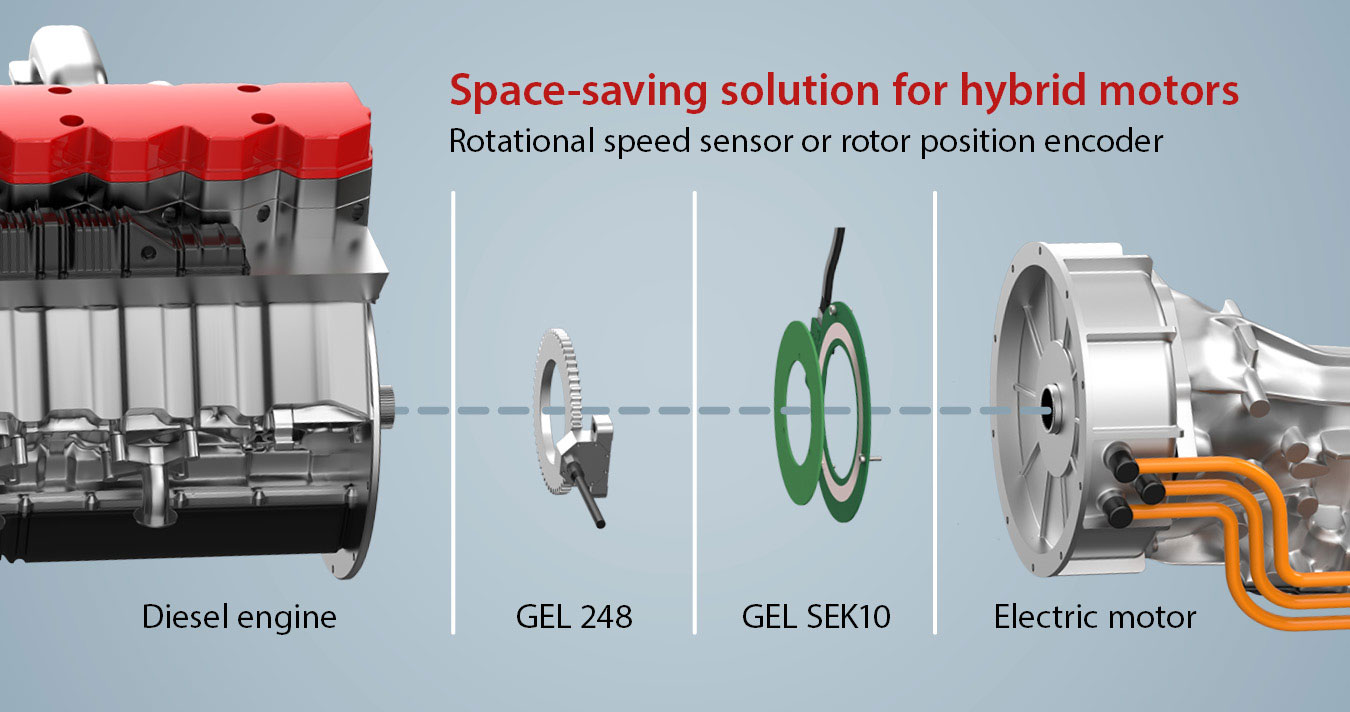
Precise rotor position and speed for combined drive concepts

  • Smooth response behavior: Precise rotor position determination for immediate, jerk-free acceleration
  • Efficient interaction: Accurate speed detection for optimal coordination of electric motor and combustion engine
  • Reliable performance: Robust sensing for stable signals and consistently high driving quality

Why the interaction of speed detection and rotor position sensing is critical in hybrid drives

In hybrid drives, the engine speed sensing of the combustion engine and the rotor position sensing of the electric motor work closely together to enable a seamless transition between both drive sources. The engine speed sensor precisely captures the crankshaft speed and thus the operating state of the combustion engine.

This information is critical for optimally controlling start-stop operations, load changes, and ignition timing. In parallel, rotor position encoders in the electric motor deliver the exact rotor angle for field-oriented control. Only with this angle can the inverter precisely build up the magnetic fields and ensure fast, jerk-free starting.

In hybrid operation, both sensor signals are combined to precisely synchronize torque transfers between the electric motor and combustion engine. The result is high driving comfort, maximum efficiency, and harmonious power flow.



Inductive rotor position encoders for robust hybrid applications

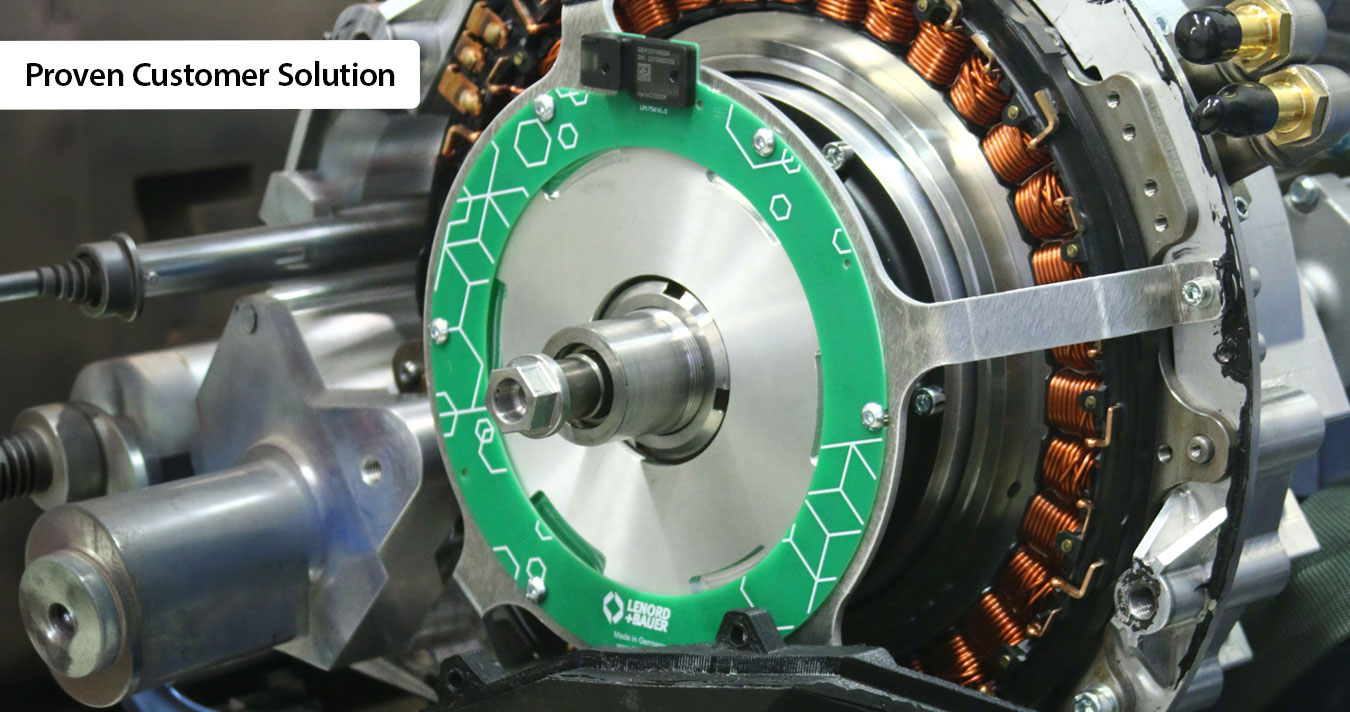
RWTH Aachen University is developing cost-efficient hybrid drives for vehicle segments where this technology has previously been considered too expensive. What makes it special: full hybrid functionality is achieved with a remarkably small number of components.

For this innovation, the “Mechatronics in Mobile Propulsion” team relies on our VarioCODER. The decisive factor was the flexible, modular, and variably mountable design of the rotor position encoder, which offers maximum design freedom particularly for large shaft diameters.


Sensor solutions for hybrid motors

GEL SEK10 Inductive rotor position encoder
GEL SEK11 Compact inductive rotor position encoder
GEL SEI10 Compact 2-channel Hall effect high-speed rotational speed sensor
GEL 2460 1-/2-channel Hall effect rotational speed sensor with screw-in thread
GEL 248 Compact 2-channel Hall effect speed sensorwit HTL- or TTL-output signals