To ensure that different packaging sizes can be processed perfectly, machine adjustments are required during changeovers, e.g. changes to height and width settings. By automating your packaging machinery, these can be carried out quickly and without errors.
Full automation or complete semi-automation of a machine is not always the right solution – instead, an individual degree of automation may be required. In mixed operation, for example, handwheels in hard-to-reach locations are replaced by positioning drives, even if the rest of the machinery is equipped with digital position displays. Furthermore, the frequency of adjustments to be made speaks particularly in favor of using drives, as they enable recurring adjustments more efficiently.
A tailored solution requires not only the hardware, but also the software modules that enable a plug-and-play solution. We are happy to support you in this regard.
Semi-automated adjustments with digital position displays
Manual adjustment and position monitoring using digital position displays is technically straightforward, attractively priced and at the same time offers a high degree of process reliability and user-friendliness – also as a retrofit solution for mechanical position indicators.
This entry point into the digitization of manual adjustment is the right, process-reliable solution for you if personnel are already available at the machinery and only a few adjustment operations are carried out per day.
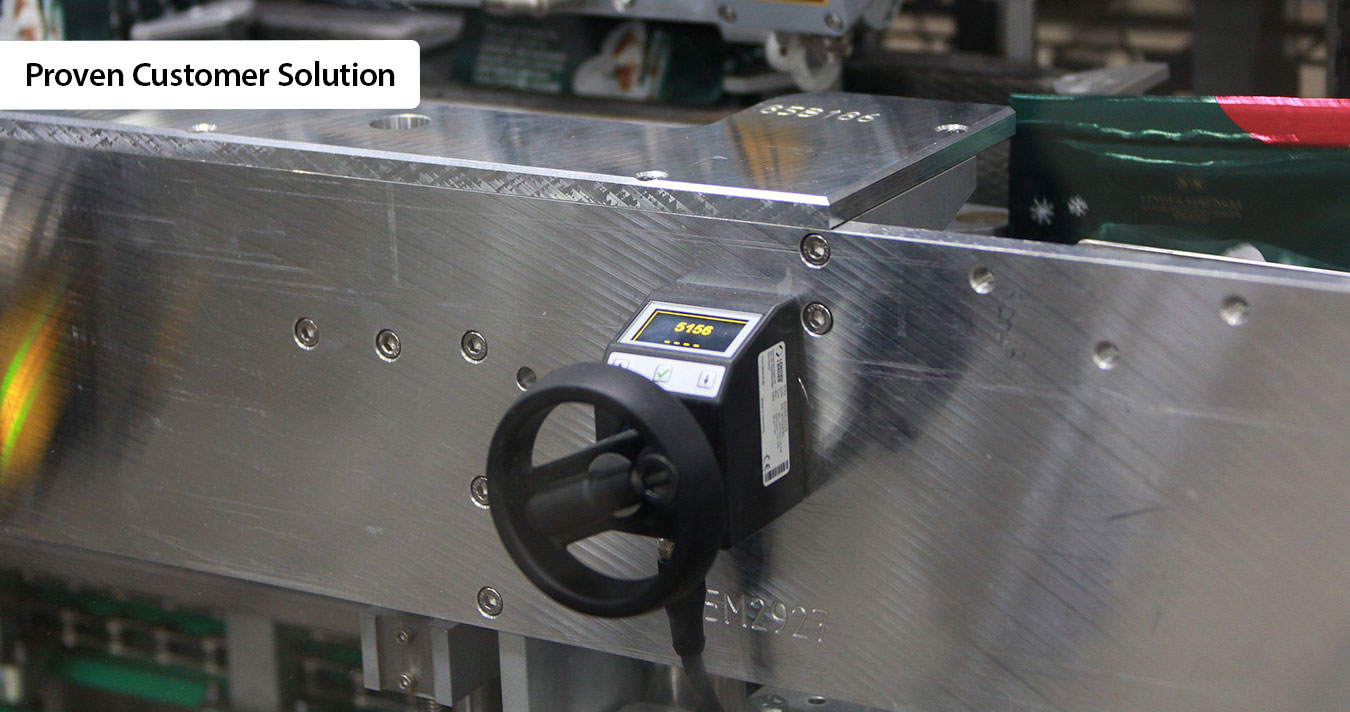
Our digital position display SeGMo-Assist is simply combined with existing handwheels and facilitates manual adjustment processes by displaying target and actual positions.
Error-free production thanks to defined target positions and actual positions
Manual adjustments without PLC feedback can lead to errors. Requirements for process quality, reproducibility and traceability often remain unmet – exacerbated by the shortage of skilled workers and the deployment of unskilled machine operators.
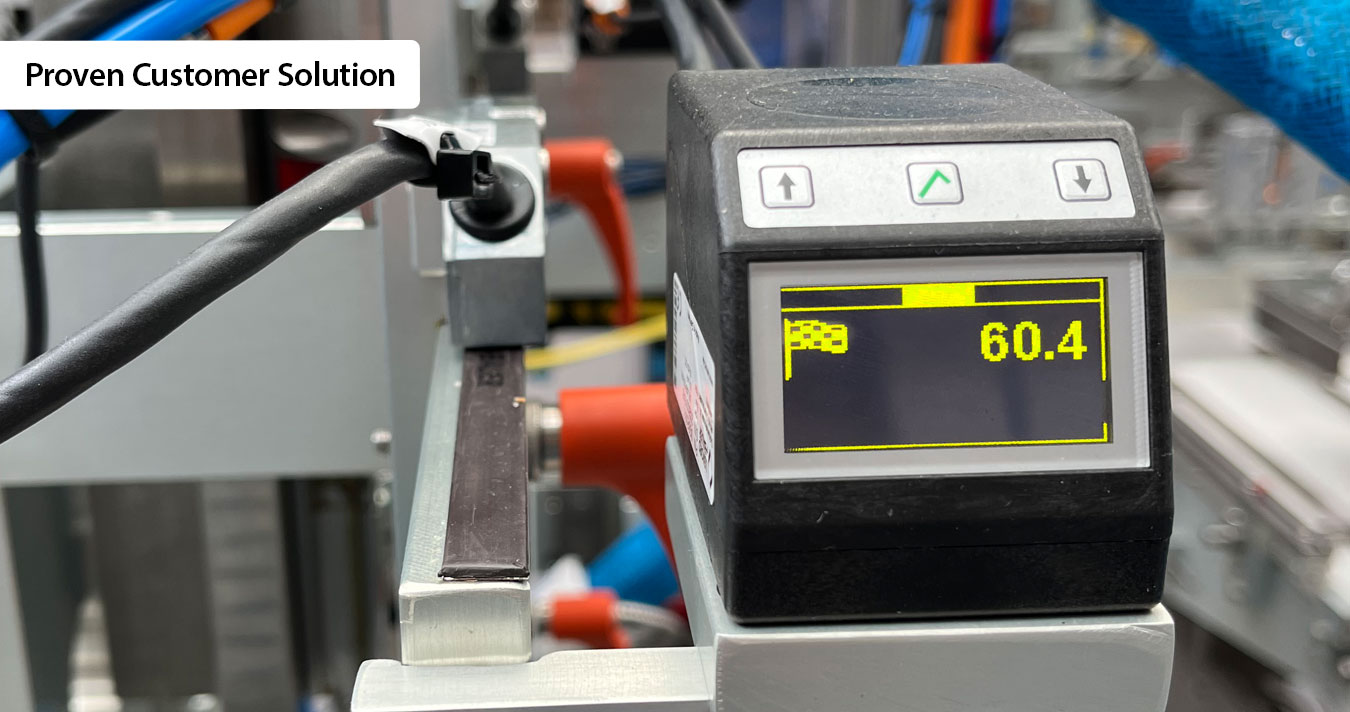
Maschinenfabrik Fritz Thürlings uses digital position displays to monitor adjusted values. "Our customers are increasingly demanding a machine restart interlock in the event of incorrect settings – this can be easily implemented with SeGMo-Assist," reports Felix Thürlings. "The display reports the manually adjusted axis positions back to the controller via a feedback signal. This way, all adjustment axes connected to the machine controller are monitored and the job only starts when the correct positions are set."
Image source: Maschinenfabrik Fritz Thürlings, checking set values with digital position displays
Digital position displays for semi-automation
GEL SEPOD
Position display for rotary and linear position measurements
GEL SEROT
Rotary sensor for the position display GEL SEPODL
GEL SELIN
Linear sensor for the position display GEL SEPODL
Increasing efficiency through full automation of machinery
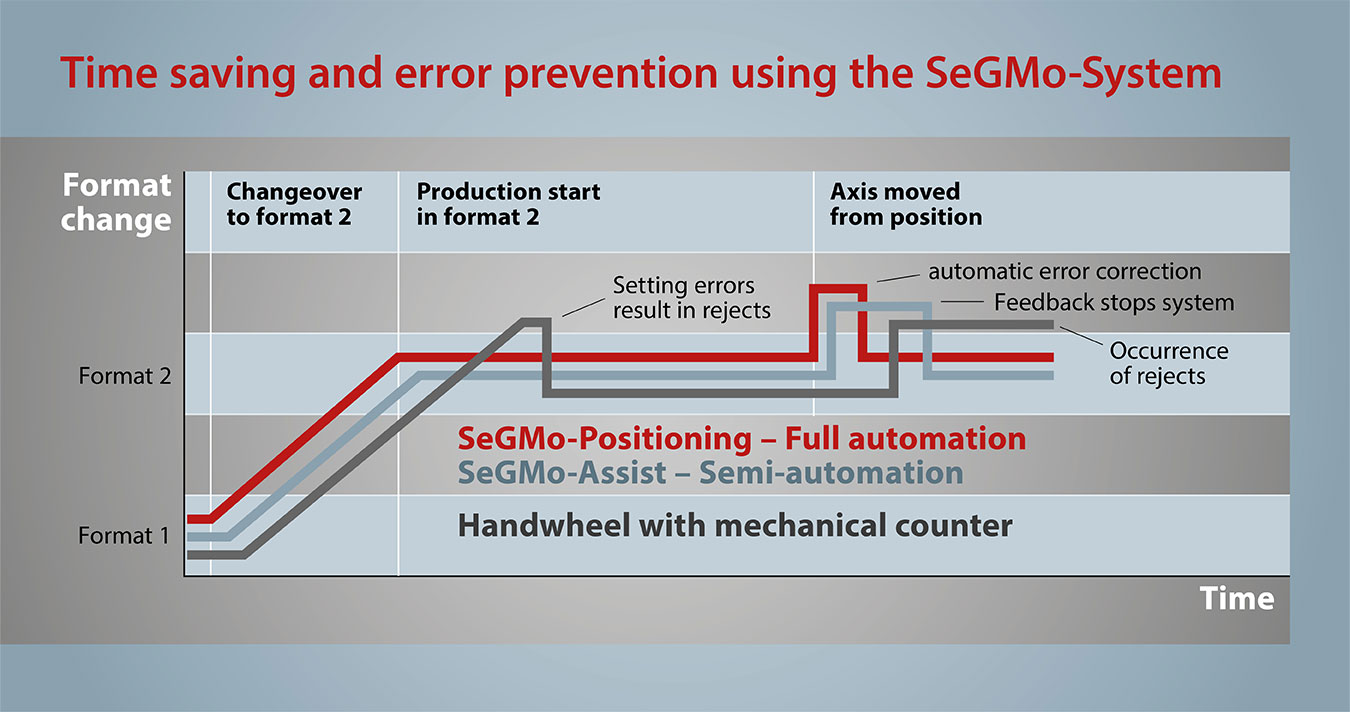
Short-notice product changes require speed, reliability and flexibility. With small batch sizes and high product variety, as well as in unattended machinery in general, fully automated adjustment with positioning drives leads to reduced changeover times, precise repeatability and, as a result, a significant increase in productivity.
A suitable solution for time-saving and reliable adjustment are our positioning drives SeGMo-Positioning. The positioning drives combine gear motors with matched power electronics and batteryless absolute encoders, and represent a plug-and-play solution with minimal engineering and installation effort.
Automated axis adjustment for maximum efficiency
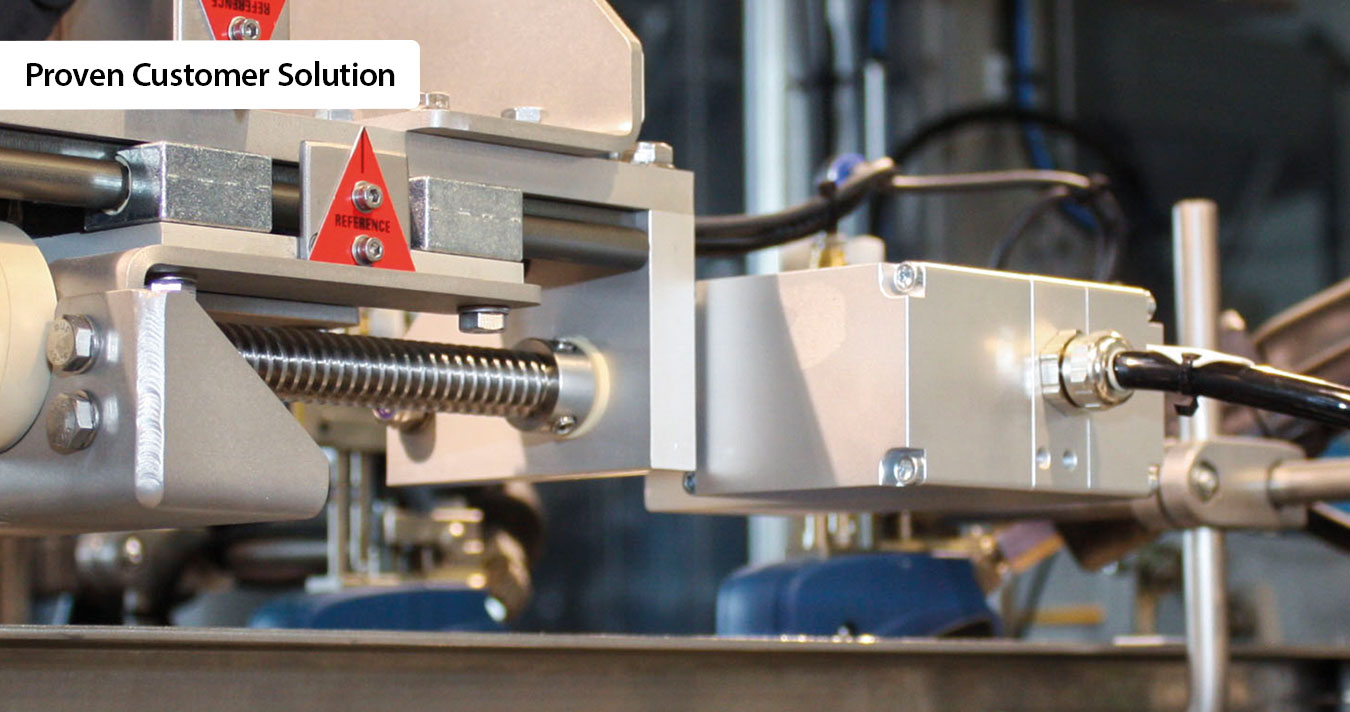
A+F Automation + Fördertechnik uses positioning drives to increase precision and process reliability. Positioning at the push of a button makes axis adjustment more convenient, faster and more reliable.
Thanks to the significant time savings, machine availability increases while downtime costs decrease considerably. Adjustment errors are a thing of the past.
The machine builder draws a clear conclusion: "This investment has definitely paid off – for us and for our customers."
Evaluating automation economically with the RoI calculator
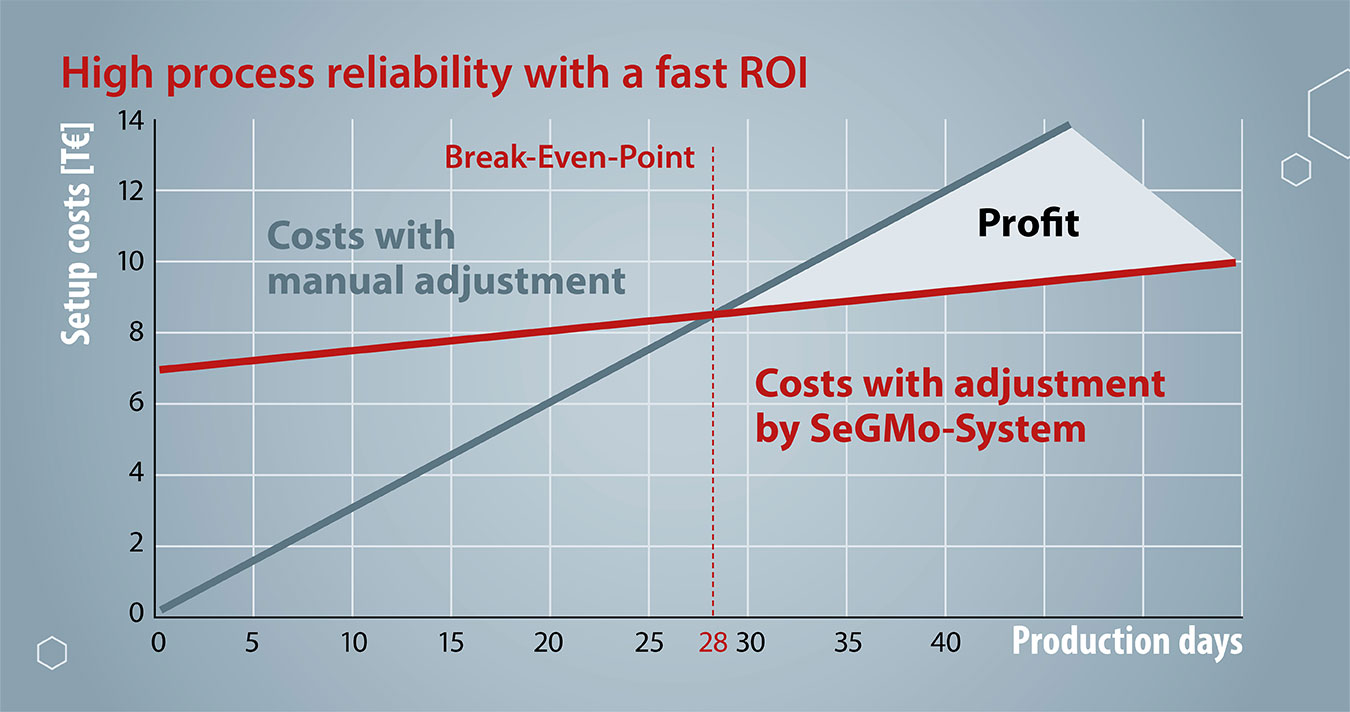
Particularly helpful when deciding to automate your machinery is our return-on-investment calculator. With just a few data points, you can calculate after how many production days the investment in the SeGMo system will pay for itself.
Parameters taken into account include the number of changeovers per day, production days per week, duration of manual changeover time, number of employees required for adjustment, and the average loss during a production stoppage.
In most cases, the break-even point is reached after just a few weeks or months, meaning that retrofit solutions also pay off quickly.
Get in touch – we would be happy to advise you!
Positioning drives for full automation
GEL 6008
Compact positioning drive for confined installation situations
GEL 6009
Compact positioning drive with through hollow shaft for confined installation situations
GEL 6013
Compact positioning drive for confined installation situations with through hollow shaft
GEL 6109
Compact positioning drive for confined installation situations
GEL 6110
Compact positioning drive with high torques
GEL 6113
Positioning drive with through hollow shaft
Good to know – quick answers
What is automated format adjustment?
Automated format adjustment uses positioning drives and digital position displays to set machines to new format parameters quickly and reproducibly during a product changeover. Depending on the degree of automation, two approaches can be distinguished: partial automation and full automation. Both levels are generally scalable and can be combined - allowing an existing system to be expanded step by step from manual adjustment to full automation.
What is semi automation?
In semi automation, digital position displays guide the operator. Stored recipes provide the setpoint; the operator initiates the manual adjustment and confirms once the target position has been reached. The format change remains manually initiated, but incorrect settings are prevented through feedback to the higher-level control system. The advantages are low investment cost, easy retrofitting of existing machines, and an immediate reduction in changeover times.
What is full automation?
In full automation, the positioning drives communicate directly with a higher-level control system. A format change is triggered centrally - all axes move to the stored target values without operator intervention. Feedback confirming that the position has been reached authorizes production to proceed. The advantages are fast format changes, complete traceability, and a foundation for Industry 4.0 concepts and unmanned production.
Semi automation or full automation - which is better?
The right degree of automation depends primarily on how frequently formats change and how many axes need to be adjusted. If formats change only a few times per day, partial automation offers the best cost-benefit ratio. The operator is reliably guided to the setpoint using digital position displays - incorrect settings are avoided and changeover time is noticeably reduced. Investment cost remains manageable, and existing machines can be retrofitted without major modifications.
The more frequently formats change - several times per hour, or in batch-size-1 production - the faster full automation pays off. All axes move automatically to the stored target value, fully relieving the operator. Full automation is also clearly superior to semi automation when a large number of axes need to be adjusted simultaneously, since parallel movement drastically reduces total changeover time.